Facilitators, not just managers.
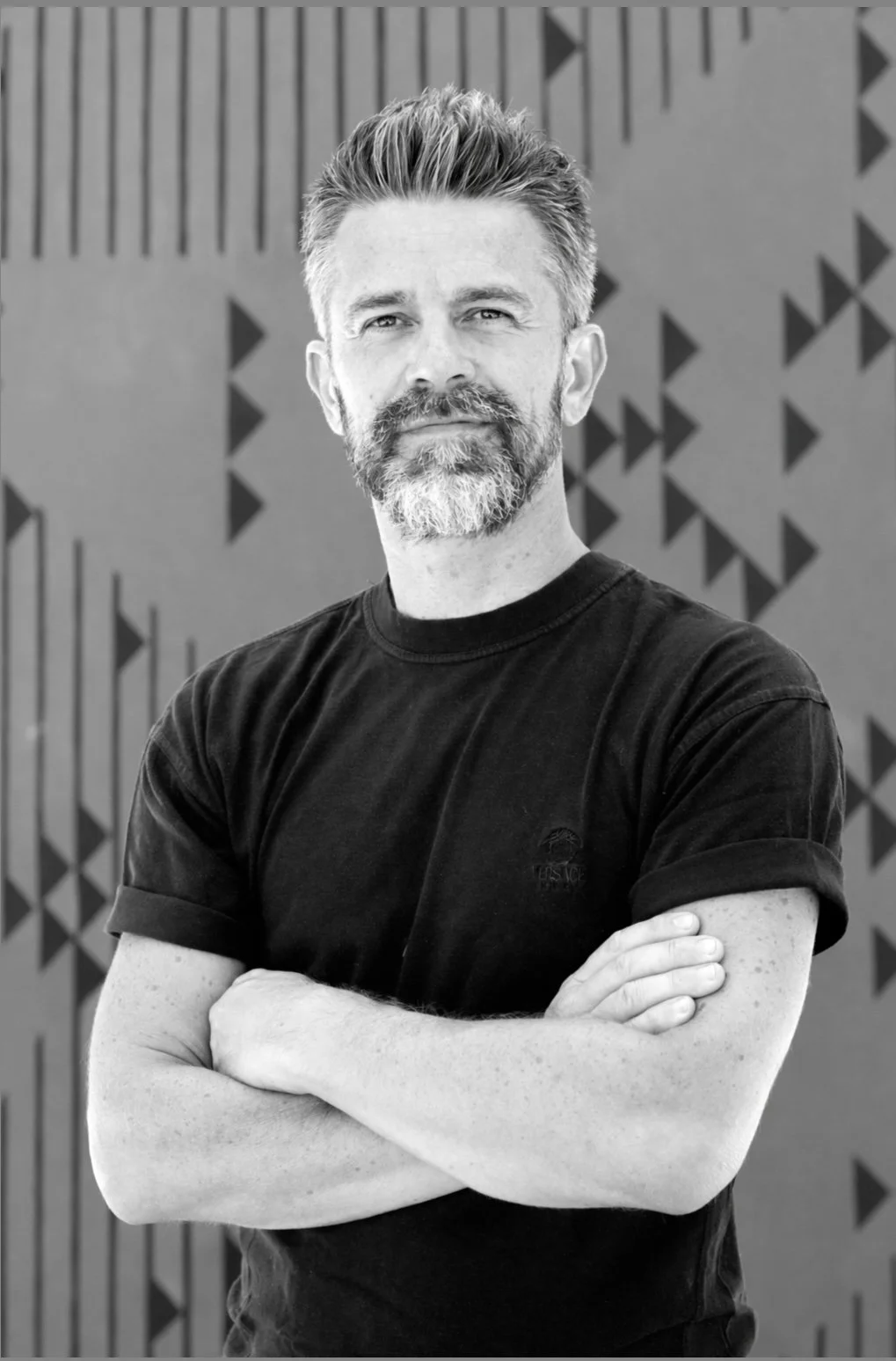
I've spent over 20 years in the rooms where organizations make their most consequential decisions. Not as an observer, but as the person designing the conditions for those decisions to happen well, and for the people in the room to actually work together.
What brought me here
I never worked as an employee. I started in digital media in the early nineties, when the internet was still a frontier, and spent the first part of my career learning how complex systems, technology and human behavior intersect.
At 30, I had a small media agency, good clients, and a growing restlessness. The Bubble Economy was coming, and I wasn't big enough to survive it.
That's when I encountered Matt and Gail Taylor and their methodology for approaching complexity through co-design. It was, as I've described it since, love at first sight. It gave me a language for something I had been observing for years without being able to name it: that the real barriers in organizations are hardly ever the ones that appear on the surface.
The work that followed took me across every continent, into banking, pharmaceuticals, consulting firms, public institutions, international summits. From the Annual Meeting in Davos to project meetings on the other side of the planet. What those 20+ years gave me, beyond the clients and the engagements, was a very specific kind of pattern recognition: the ability to read what is actually happening in an organization, beneath what leadership believes is happening.
The tools have never been more powerful. The data has never been more abundant. And yet the gap between what organizations know and what they actually do keeps growing. That gap lives in the system. It's not in the data. It's between the data. That's where I work.
Three things can’t be automated
Reading the system from the inside
Pattern recognition built over hundreds of real engagements, in contexts where the stakes were high and the answers were not in the data.
Facilitation as a precision instrument
Not a workshop format. The capacity to bring the right people into the same space, make the invisible visible, and build conditions for decisions that actually stick.
Being present when it matters
The moment a conversation risks collapsing or exploding is exactly when a body in the room, with the right experience, changes everything. This is irreplaceable by definition.
Where this is going
As AI absorbs more of the operational and analytical work inside organizations, the value of human judgment concentrates precisely in the territory I've always worked in: the quality of decisions, the coherence of leadership, the ability of people to work together under pressure and uncertainty.
The organizations that will perform well in a world with fewer people and more complexity are not the ones with the best tools. They are the ones that have built the architecture, the habits and the governance to use those tools well. That architecture is what TPA is designed to make visible and to change.
In 2022 I published "La Cultura dell'Incertezza" with Guerini Next, a management book on systems leadership and co-design in complex environments. A new book is in preparation (in english).
Selected work and context
Locations
Geneva, Zurich, Lausanne, Lugano, Davos (WEF Annual Meeting)
Milan, Rome, London, Paris, Berlin, Wien, Warsaw, Copenhagen
New York, Boston, Dallas, Nashville
Dubai, Mumbai, Cape Town, Amman, El Cairo
Beijin, Dalian, Tianjin, Hong Kong, Melbune, Wellington
Industries
Banking and financial services
Pharmaceuticals and health
Manufacturing and transportation
Management consulting
Public institutions and non-profits
Food and beverage
Consulting firms
Universities